
Bristol County Arrest Warrants Explained
An arrest warrant is a judge's permission to take a named or described person into custody in Bristol County. Massachusetts rule 6 lets a District Court authorize either a summons or an arrest warrant on a complaint, while the Superior Court acts after an indictment. The document has rules of its own. It must identify the person, state the substance of the offense, and be directed to an authorized officer. Anything less is defective. That is one reason a lawyer reads the warrant before anything else happens in the case.
Bristol County Warrants and the Summons Preference
Massachusetts procedure leans toward summonses. Rule 6 of the Rules of Criminal Procedure tells a court to prefer a summons over an arrest warrant whenever a summons will get the job done, weighing the charge, the person's history, and the odds the person shows up. The complaint behind a Bristol County warrant follows a set path too. The District Court complaint standards lay out how a clerk-magistrate weighs probable cause and the police statement of facts before any process issues. A private citizen can apply for a complaint as well. The state charges a filing fee for that route.
Inside a Bristol County Arrest Warrant
A Bristol County warrant and its docket carry the identifiers that matter. Reading them in order tells you which court controls the case and who must be contacted.
| Warrant or Docket Number | The court code plus a year and sequence, for example 31-CR-0000-0000. |
|---|---|
| Named Person | The person the order describes, sometimes with aliases listed. |
| Charge | The offense and whether the case is charged as a felony or a misdemeanor. |
| Issuing Judge or Court | The division or session that signed the order and controls the recall. |
| Bail or Release Terms | Any amount or condition a judge has recorded, if any has been set. |
| Date Issued and Serving Agency | When the order was entered and which department is directed to execute it. |
Note: The state's warrant statute requires more identity detail in the police system than any public docket will display.
Bristol County Arrest Warrants by Court Level
The signing court decides where the case lives. Local charges and motor-vehicle crimes usually start in a District Court division, one of four serving Bristol County. Felonies typically arrive by grand jury indictment and land in the Bristol County Superior Court in Taunton or its Fall River criminal session. The New Bedford Superior location takes civil matters only. Send a criminal question there and it goes nowhere. When a paper says Superior Court without naming a session, check the docket instead of guessing between the two criminal spots.
Serving Arrest Warrants in Bristol County
Serving warrants is police work in Bristol County. City and town departments execute criminal warrants for the courts that serve their area, and the Massachusetts State Police handle task-force and highway matters. The sheriff does not serve criminal warrants. The office takes custody after an arrest and runs intake and bail, while its separate Civil Process Division handles civil paper.
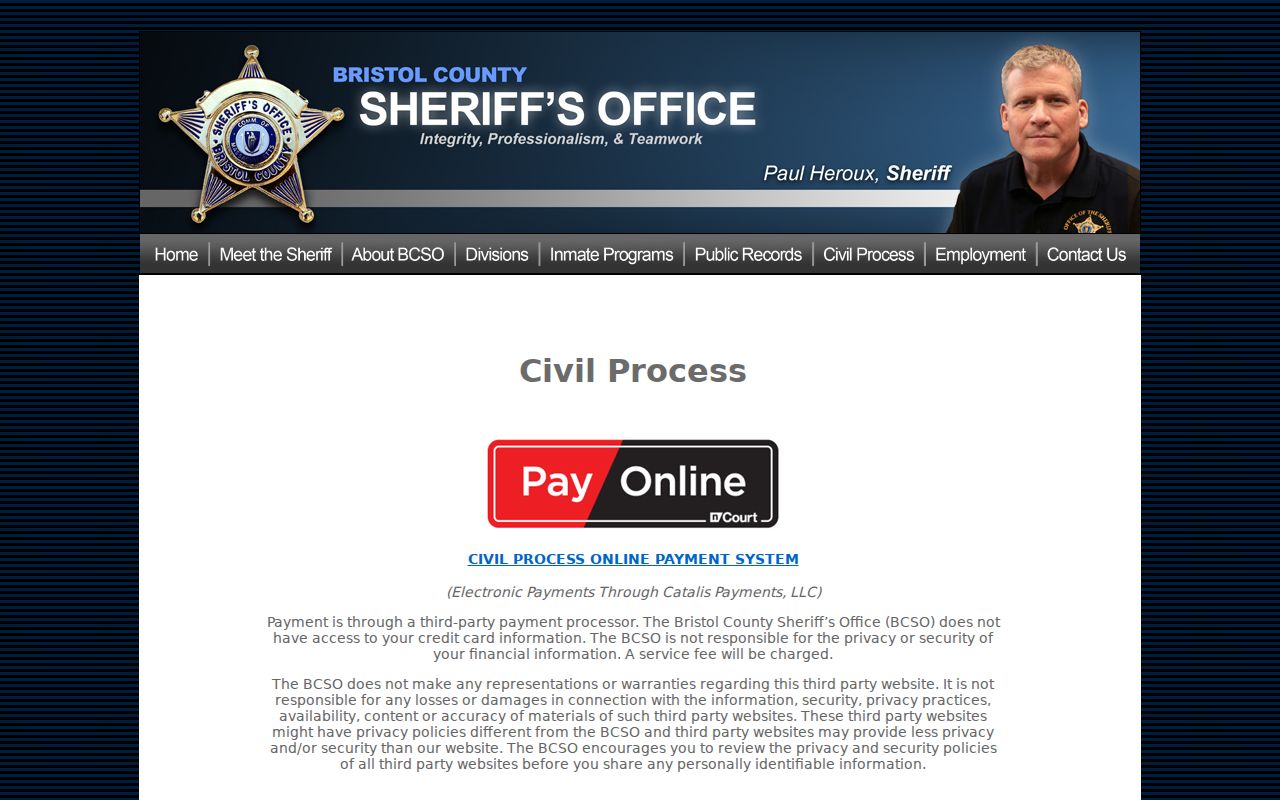
That division serves summonses, executions, and civil capiases across Bristol County. An arrest under a civil capias secures a court appearance, not a criminal charge.
After a Bristol County Warrant Arrest
An arrest starts custody, not the end of the case. The person is booked, arraigned before a judge, screened for appointed counsel, and given bail or release conditions. The court sets those terms. State law requires a warrant-system check before any release or bail. From there, custody runs through the Bristol County jail in North Dartmouth.
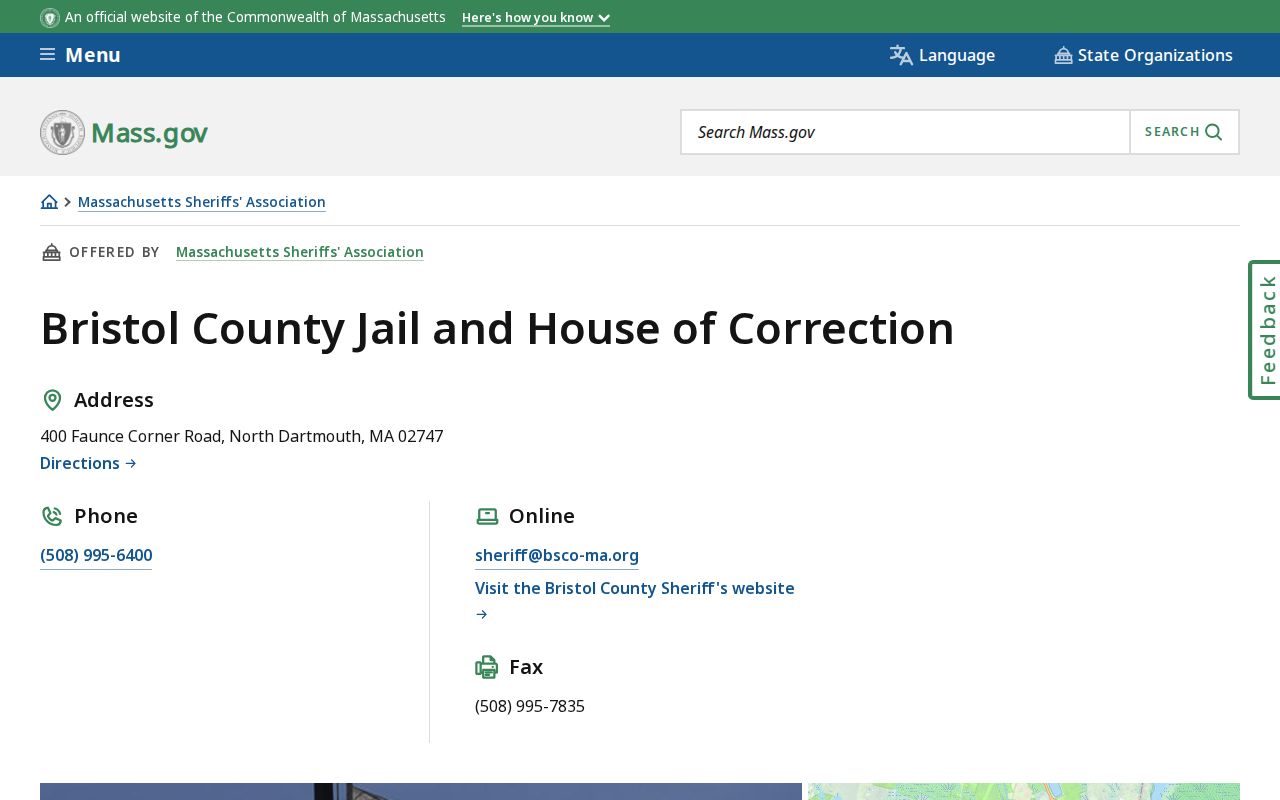
That campus also runs the historic Ash Street lock-up in New Bedford as a regional holding site for Bristol County.
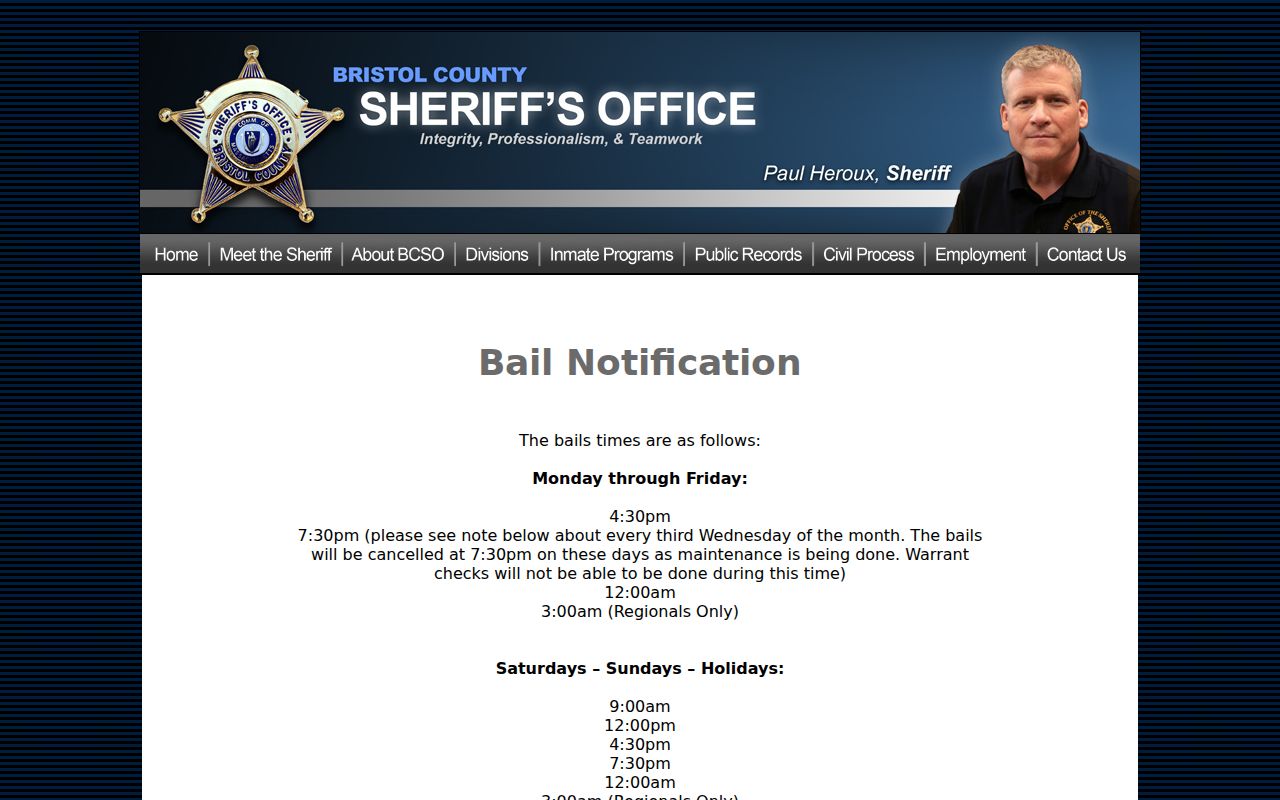
Bail follows posted windows through the sheriff's bail notification page. Check in at the Dartmouth Women's Center security desk. Any bail over $5,000 takes a bank check payable to the Commonwealth of Massachusetts.
Comparing Arrest, Summons, and Bench Warrants
Three instruments, three jobs in Bristol County. A summons asks the person to appear. An arrest warrant authorizes custody on a charge. A bench warrant, which Massachusetts usually calls a default warrant, answers something that already went wrong in a pending case, so the response to each differs.
| Feature | Arrest Warrant | Summons | Bench Warrant |
|---|---|---|---|
| What It Orders | Custody on a charge | Appear on your own | Custody after a missed obligation |
| Basis | Probable cause of an offense | A charge that does not need custody | Failure to appear or comply |
| Who Issues It | Judge or clerk-magistrate | The court on the complaint | The judge in the pending case |
| How to Respond | Surrender, bail, or counsel | Show up on the date | Appear, pay, or move to recall |
Bristol County Warrant Records and Criminal Records
A court docket and a criminal offender record are two different things. The docket lists what got filed and what happened in court. A criminal record is different. It carries a person's identifiable history, and the sheriff's office says flatly that it cannot release that information. The public-records route will get you agency documents, like policies and logs, but not a person's record. That line guards privacy, and it also shapes any Bristol County warrant check. A records request will not answer it. Even an old case index entry goes stale once no one refreshes it, so the question belongs with the court that holds the case.
Federal Warrants Reaching Bristol County
Federal process runs on its own track into Bristol County. The U.S. Marshals Service in Massachusetts handles federal fugitive work and lists Bristol County among its district counties, alongside a task force built with state and local partners. Federal dockets sit in PACER, which charges by page. A state court search in Bristol County will never confirm a federal warrant. A federal warrant will never show on a District Court docket either.
If There's an Arrest Warrant for You
Facing a Bristol County warrant? Plan the surrender rather than waiting for a traffic stop. Talk to a lawyer, confirm the case and the issuing court, and decide together whether to appear, post bail, or ask the court to recall the warrant. The official warrant-check guidance says counsel may attend with you and that a public defender may be appointed in eligible criminal cases.
Important: Call a lawyer before turning yourself in. An arrest warrant can end in custody at any traffic stop or police contact.